
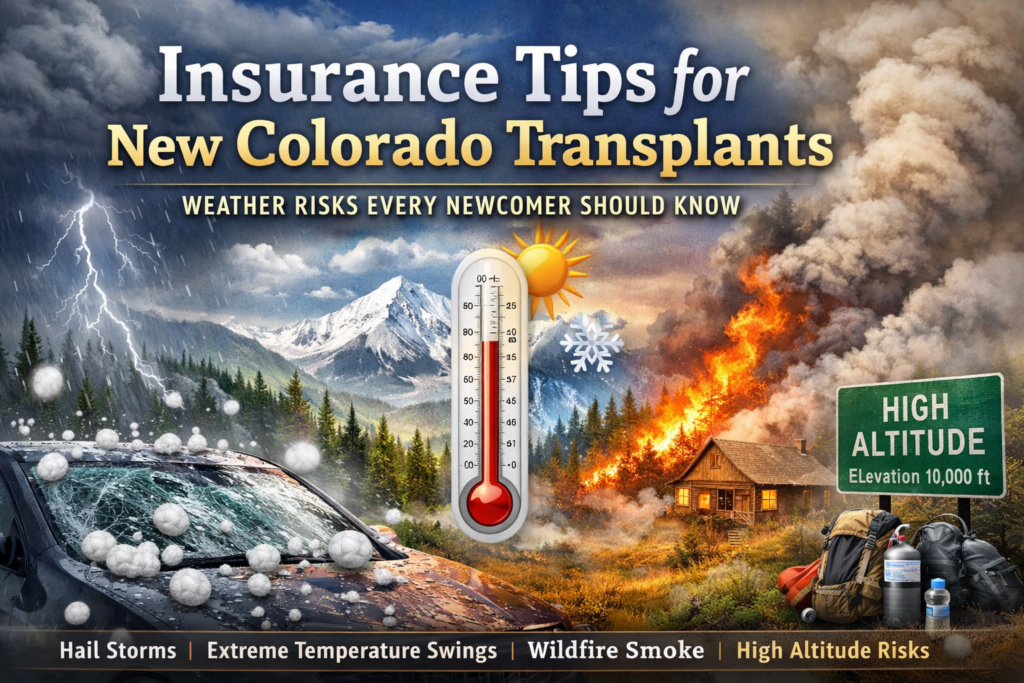
Welcome to Colorado! Whether you’ve relocated for the mountains, the job market, or our 300+ days of sunshine, you’ve chosen an amazing place to call home. But along with breathtaking views and outdoor adventures comes a unique set of insurance considerations that many newcomers don’t anticipate.
After helping hundreds of new Coloradans navigate their insurance needs, I’ve learned that what worked in your previous state might leave you underprotected here. Let’s walk through what you need to know to make sure you’re properly covered in the Centennial State.
Hail: Colorado’s Billion-Dollar Problem
If you’re moving from most other states, you probably haven’t thought much about hail damage. In Colorado, it’s not a matter of if, but when. The Front Range corridor from Colorado Springs to Fort Collins experiences some of the most severe hail in the country, with storms causing over a billion dollars in damage some years.
What you need to know:
- Standard homeowners policies cover hail damage, but pay close attention to whether your roof coverage is “replacement cost” or “actual cash value.” The difference can be tens of thousands of dollars out of pocket.
- Many insurers now impose separate wind/hail deductibles (often 1-2% of your home’s value) in addition to your regular deductible.
- Your car’s comprehensive coverage protects against hail damage, but one significant claim can affect your rates for years. Some longtime Coloradans budget for cosmetic hail damage rather than filing claims.
- Consider increasing your auto comprehensive deductible and setting aside the premium savings for minor hail repairs.
Wildfire Risk is Real—Even in Suburban Areas
Colorado’s wildfire season grows longer and more intense each year. Even if you’re not living deep in the mountains, wildfire smoke, ash, and proximity to evacuation zones can affect your coverage and premiums.
What you need to consider:
- Homes in or near the Wildland-Urban Interface (WUI) may face higher premiums or coverage restrictions. Some insurers won’t write new policies in high-risk areas.
- Creating defensible space around your property—clearing brush, using fire-resistant landscaping, and maintaining your roof—can qualify you for mitigation discounts.
- Make sure you have adequate coverage for “additional living expenses” if you’re evacuated. Hotels, meals, and temporary housing add up quickly, and some policies cap this coverage.
- Document your belongings with photos or video now. In an evacuation, you won’t have time.
That “Dry Climate” Creates Unique Home Risks
Colorado’s low humidity and dramatic temperature swings create problems many transplants don’t expect.
Freeze-thaw foundation issues: Our soil expands and contracts with temperature changes, which can crack foundations and basement walls. Most policies cover sudden, accidental damage but not gradual settling or maintenance issues. Get a foundation inspection when you buy, and address minor cracks before they become major problems.
Burst pipes: When it’s 60 degrees one day and 10 degrees the next, pipes can freeze and burst—even in newer homes. Make sure your policy includes water damage coverage, and know where your main shutoff valve is located.
Dry air and fire risk: The same dry climate that makes our winters bearable also makes homes more susceptible to fire. Humidifiers, space heaters, and fireplaces all increase risk if not properly maintained.
Flash Flooding Can Happen Anywhere
Colorado’s mountainous terrain and afternoon thunderstorms create dangerous flash flooding conditions, even in areas far from rivers or streams. Recent devastating floods in Boulder, Fort Collins, and along the Front Range have shown that traditional flood maps don’t tell the whole story.
Critical points:
- Standard homeowners insurance does NOT cover flood damage. You need a separate flood insurance policy.
- Don’t assume you’re safe because you’re not in a FEMA flood zone. Many of Colorado’s worst flood losses occurred in “low-risk” areas.
- Flood insurance has a 30-day waiting period, so don’t wait until monsoon season starts in July.
- Even if you’re renting, renters flood insurance is available and affordable—often less than $200 per year.
Auto Insurance: More Than Just Mountains and Snow
Colorado drivers face unique challenges that affect insurance needs and rates.
Higher altitudes affect your car: Batteries die faster, tires lose pressure more quickly, and cooling systems work harder. While these are maintenance issues, understanding them helps prevent claims.
Uninsured motorist coverage matters: Colorado has a higher rate of uninsured drivers than many states. Don’t skimp on uninsured/underinsured motorist coverage.
Comprehensive claims are common: Between hail, wildlife collisions (deer, elk), falling rocks on mountain passes, and theft in urban areas, comprehensive coverage pays for itself.
Winter driving: Even if you had snow where you moved from, Colorado mountain passes are different. Consider increasing your collision coverage limits if you’ll be driving I-70 or other mountain routes regularly.
Don’t Forget the Altitude Effect on You
Here’s one that catches people off guard: life and disability insurance underwriting can be affected by altitude-related health conditions. If you have pre-existing heart or lung conditions, insurers may want to see how you adjust to altitude before finalizing coverage. It’s worth getting quotes and locking in coverage sooner rather than later.
Get Your Coverage Right from the Start
The worst time to discover you’re underinsured is when you’re filing a claim. Colorado’s unique weather patterns, geological features, and lifestyle factors require a fresh look at your insurance portfolio—even if you were well-covered in your previous state.
Take an hour to review your policies with an agent who understands Colorado-specific risks. A few adjustments now can save you from major financial stress down the road.