
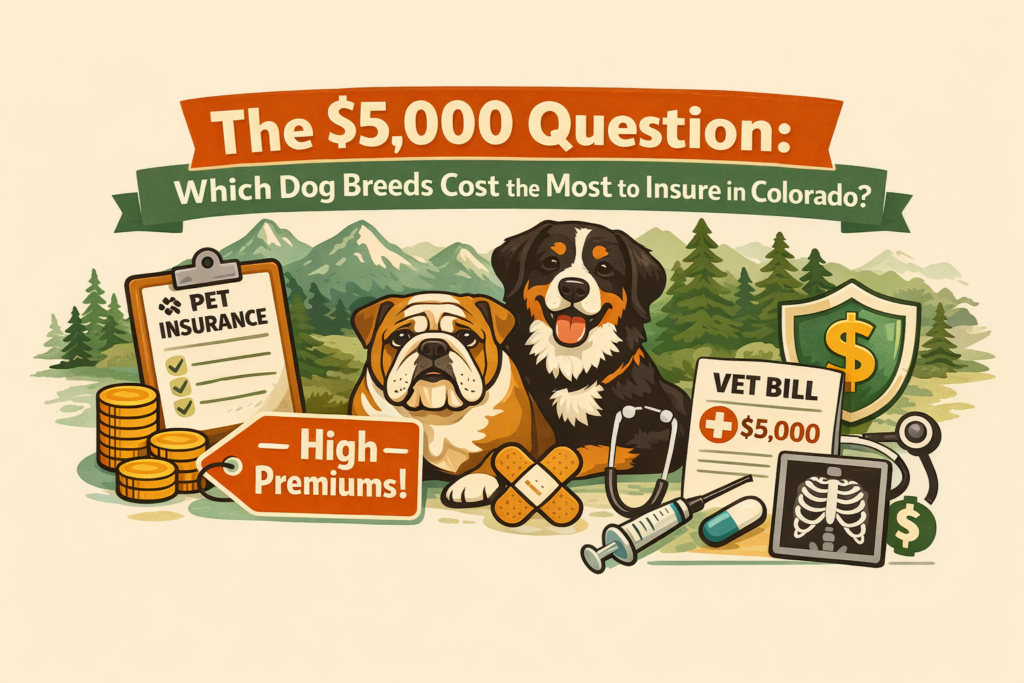
So you fell in love with that adorable English Bulldog puppy at the Denver Pet Expo. Or maybe you’re eyeing a majestic Bernese Mountain Dog because, well, you live in the mountains—it just makes sense, right?
Before you bring home your new best friend, let’s talk about something nobody mentions at the breeder’s house: insurance premiums.
Turns out, not all good boys and girls cost the same to insure. Some breeds will have you paying double (or triple) what your neighbor pays for their mutt. Here’s why—and which breeds make insurance companies nervous.
The Hall of Fame: Most Expensive Breeds to Insure
1. English Bulldogs – The Lovable Money Pit
Monthly premium range: $80-$150+
These wrinkly, snorting bundles of joy are basically walking vet bills. Breathing problems (thanks to that smooshed face), hip dysplasia, skin infections in all those adorable rolls, and cherry eye issues mean insurers know they’re going to be cutting checks. In Colorado’s dry climate, their skin issues can get even worse.
Fun fact: An English Bulldog’s lifetime vet costs can easily hit $20,000-$30,000. Suddenly that premium doesn’t look so bad.
2. Bernese Mountain Dogs – The Colorado Poster Child with a Dark Secret
Monthly premium range: $70-$130
Yes, they’re perfect for Colorado. Yes, they look amazing in your Subaru with a mountain backdrop. But these gentle giants have tragically short lifespans (6-8 years) and are prone to cancer, hip dysplasia, and bloat—a life-threatening emergency that can cost $5,000+ to treat.
Insurance companies price in these risks. Your Berner is expensive to love.
3. Rottweilers – The Liability Wild Card
Monthly premium range: $75-$140
Here’s where it gets interesting. Rottweilers aren’t necessarily expensive because they’re sickly—they’re expensive because of liability. Some insurers worry about bite risk and potential lawsuits. In Colorado, if your Rottie bites someone at the dog park, you could be facing serious legal bills.
Pro tip: Some insurers won’t even cover certain “aggressive” breeds, while others just charge more. Worth shopping around.
4. French Bulldogs – The Small but Mighty Premium
Monthly premium range: $70-$125
All the expensive health issues of their English cousins, just in a smaller (but somehow pricier) package. Frenchies are having a moment in Denver and Boulder, but their breathing problems, spinal issues, and heat sensitivity (rough in Colorado summers, even at altitude) make them insurance gold mines.
5. German Shepherds – The Working Dog Tax
Monthly premium range: $65-$115
Popular in Colorado for a reason—smart, loyal, active. But they’re prone to hip dysplasia, degenerative myelopathy (a spinal cord disease), and bloat. An emergency bloat surgery at an emergency vet in Denver? Easily $3,000-$7,000.
6. Great Danes – Go Big or Go Broke
Monthly premium range: $70-$130
Everything costs more when your dog weighs 150 pounds. Medication, surgery, even routine procedures—it’s all sized up. Add in their predisposition to heart disease, bloat, and bone cancer, and you’ve got premium prices to match their premium size.
Why Colorado Makes a Difference
You might be thinking, “Wait, don’t these breeds cost the same to insure everywhere?”
Not quite. Here’s what makes Colorado unique:
Altitude issues: Brachycephalic breeds (bulldogs, pugs, Boston terriers) already struggle to breathe. Add altitude, and you’re looking at more frequent vet visits and oxygen therapy bills.
Outdoor risks: We hike. A lot. Breeds prone to joint issues (Labs, German Shepherds, Golden Retrievers) often see more injuries on Colorado trails. ACL tears on a rocky descent? That’s a $4,000-$6,000 surgery.
Wildlife encounters: Rattlesnakes, porcupines, and curious skunks don’t care what breed your dog is, but emergency treatment after a rattlesnake bite can run $2,000-$5,000. Some insurers factor in regional wildlife risks.
Vet costs: Emergency veterinary care in Denver and Boulder isn’t cheap. Insurers know this and price accordingly.
The Flip Side: Cheapest Breeds to Insure
Want to save money? Mixed breeds and “boring” dogs are your friend:
- Mixed breeds/mutts: $25-$50/month (genetic diversity = fewer health problems)
- Border Collies: $35-$65/month (hardy working dogs)
- Australian Cattle Dogs: $30-$60/month (bred tough)
- Beagles: $35-$60/month (generally healthy, though they’ll eat anything)
Basically, if your dog’s face is the normal shape and they weren’t selectively bred into health problems, you’ll pay less.
So… Should You Skip the Expensive Breed?
Absolutely not (unless your budget truly can’t handle it).
Here’s the thing: if you’re already committed to a breed that’s expensive to insure, you definitely need insurance. These aren’t arbitrary premium hikes—they’re based on real data about real vet bills you’re statistically likely to face.
That $120/month premium for your English Bulldog? It looks a lot better than a $6,000 bill when Rufus needs soft palate surgery to breathe properly.
What Actually Affects Your Premium
Breed is big, but it’s not everything. Insurers also consider:
- Age: Puppies and seniors cost more
- Location: Denver vs. rural Colorado pricing varies
- Deductible: Higher deductible = lower premium
- Reimbursement level: 70% vs. 90% reimbursement changes your rate
- Wellness coverage: Adding routine care increases costs
The Bottom Line
Love the breed you love. Just go in with your eyes open about what it’ll actually cost—not just the puppy price, but the lifetime of care.
And honestly? If you’re spending $120/month on insurance for your Frenchie, you’re probably still coming out ahead compared to paying out-of-pocket for all the weird stuff that’s going to go wrong with those adorable bat ears.